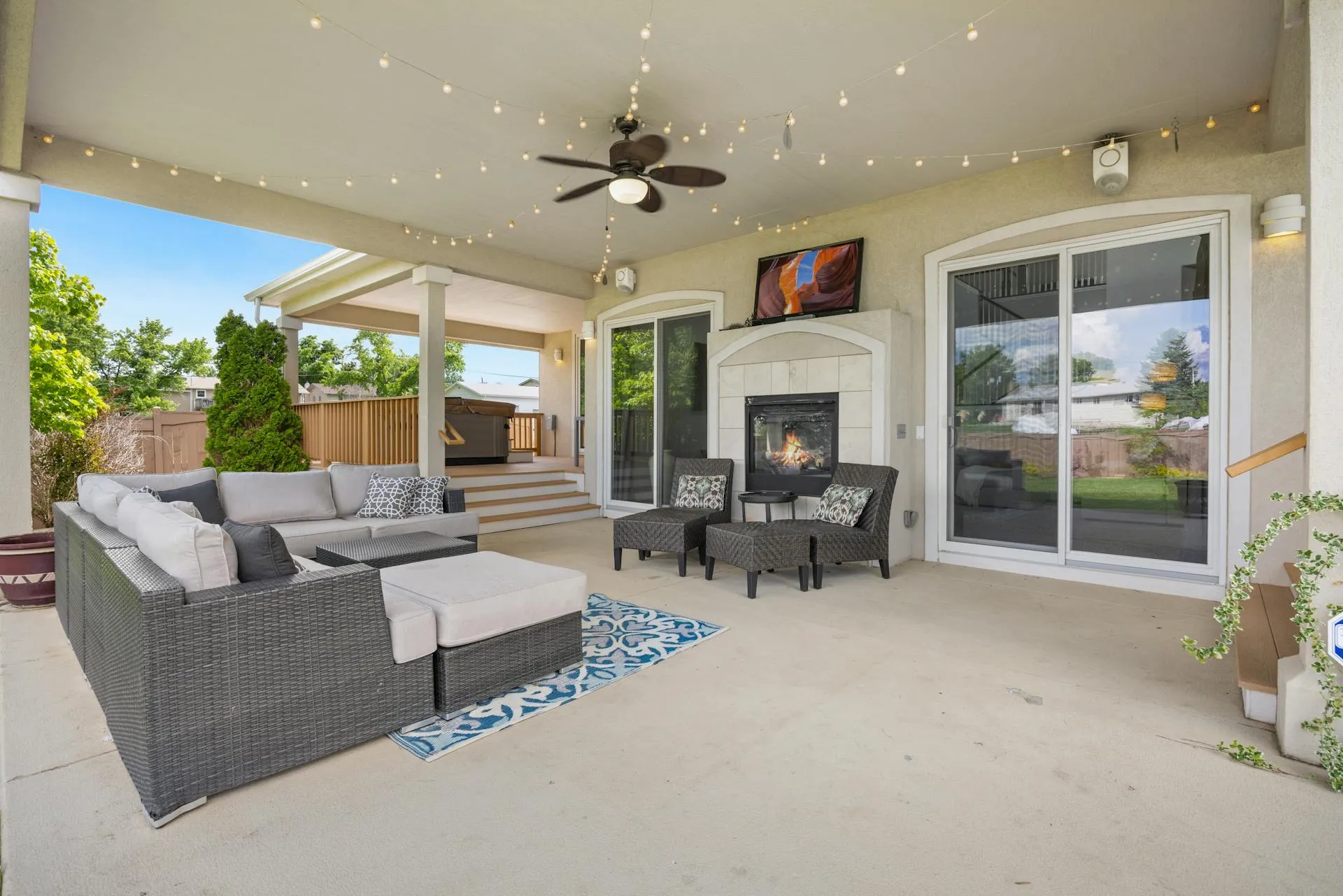
Yes, a concrete patio can increase your home’s value with an estimated return on investment between 50% and 100%, depending on the design, finish, size, and where you live. On average, most homeowners see a return of around 70%, meaning a patio that costs $5,000 to install could add roughly $3,500 to your home’s resale price.
High-end options like stamped or stained concrete with a professional design can push returns to 90% or higher, while simpler finishes like exposed aggregate or a basic DIY pour tend to sit closer to 50%. Climate also matters, homes in warm, sunny regions see the strongest returns since buyers can enjoy the outdoor space year-round.
Below, we break down every factor that affects your concrete patio’s ROI, including finish type, patio size, location, and whether to hire a pro or do it yourself so you can make the smartest investment for your home.
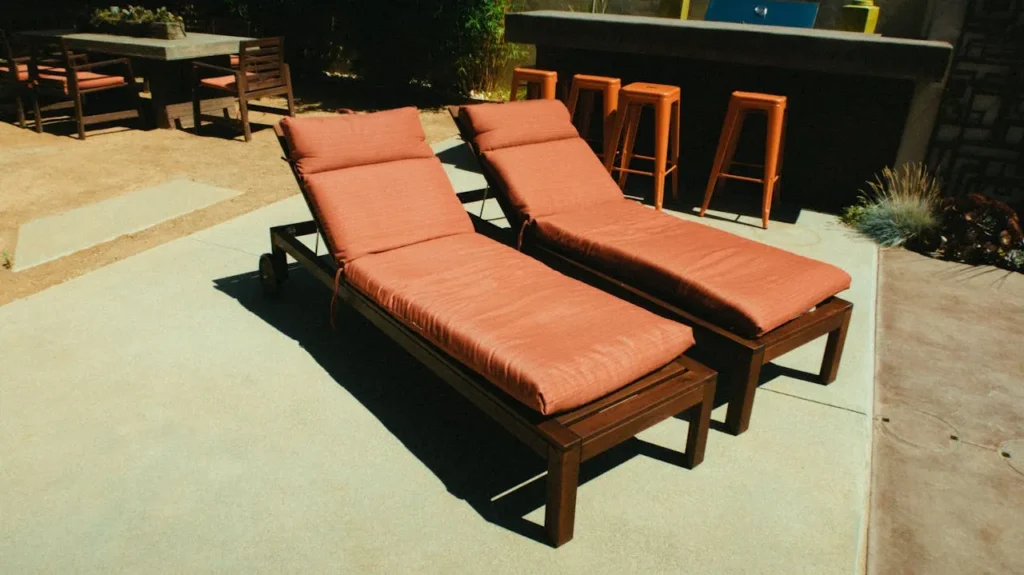
What Affects the Value a Concrete Patio Adds to Your Home?
A few important things play a role in how much a concrete patio boosts your home’s worth. The quality of the installation matters most, but where you live, the size of your patio, and the design you choose can also make a big difference.
A concrete patio with a great design can bring back up to 90% of what you spent and sometimes even 100%. Both the layout and the surface finish play a big role in that number. A basic, rectangular slab with an exposed aggregate finish used mainly for backyard gatherings will usually return closer to 50%. On the other hand, a multi-level patio with a stamped concrete overlay and a paver border can push your return to 90% or higher, and in some cases right up to 100%.
Patio layouts vary a lot, but you’ll generally see a better return when you work with a landscape designer to build an outdoor space that blends with the rest of your yard and gives your property a polished, unified look. When it comes to surface options, stamped and stained concrete tend to deliver the best returns. Stenciled, exposed aggregate, and painted finishes usually fall on the lower end. Polished, broom-finished, and trowel-finished concrete land somewhere in between.
| Concrete Finish Type | Estimated ROI |
|---|---|
| Stenciled | 50%–60% |
| Exposed Aggregate | 50%–60% |
| Painted | 50%–60% |
| Broom Finish | 60%–70% |
| Trowel Finish | 60%–70% |
| Polished | 60%–80% |
| Stained | 80%–90%+ |
| Stamped | 80%–90%+ |

How Your Climate and Location Affect Patio ROI
Where you live plays a big role in how much value a concrete patio adds to your home. Buyers in warmer regions can use an outdoor patio for most of the year, which makes the space more appealing and drives up your return. In hot, sunny climates, a well-built concrete patio with a premium finish can bring back 80% to 90% or more of your investment. In areas with mild weather, expect a slightly lower return. In colder or rainier climates where the patio can only be used for a short stretch each year, the ROI drops further.
| Climate Type | Estimated ROI |
|---|---|
| Cold or Rainy Year-Round | 50%–60% |
| Moderate Temperatures | ~70% |
| Hot and Sunny | 80%–90%+ |
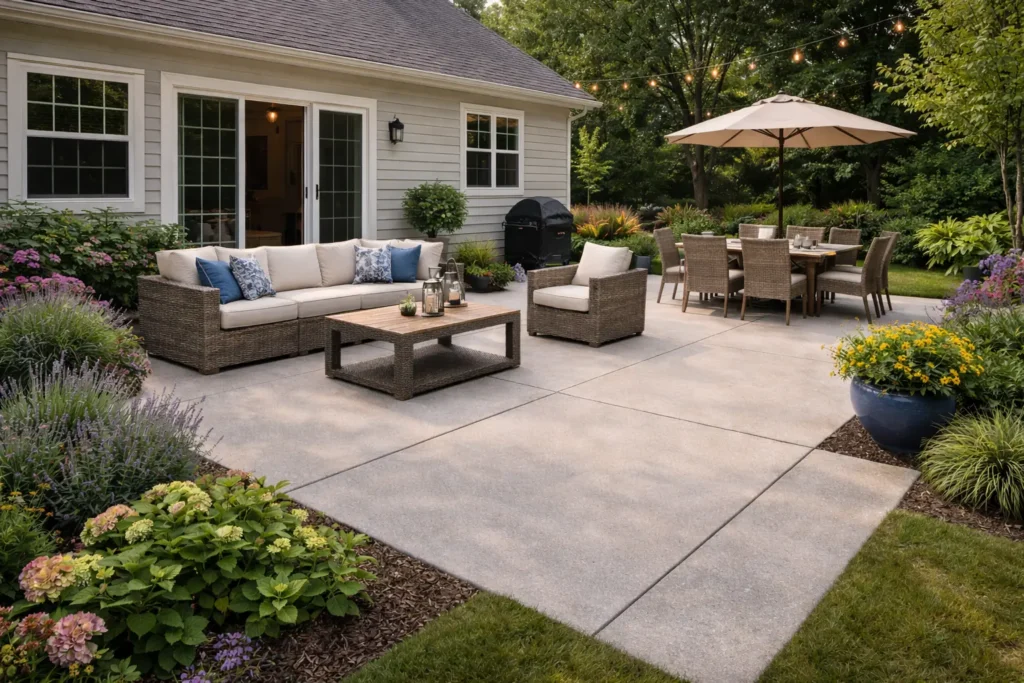
Does Patio Size Affect Your Return on Investment?
The size of your concrete patio will directly impact what you pay to install it, but it also plays a smaller role in your overall return. For most standard-sized patios, you can expect an average ROI of around 70%. A patio that’s too small may only return about 50%, since it limits how the space can be used. Larger patios tend to add more value up to a point. Once a patio takes up too much of the backyard, most buyers see it as a drawback rather than a benefit.
How patio size affects your return depends a lot on your yard and what’s common in your neighborhood. The table below gives a rough idea of what to expect based on square footage. These numbers assume your yard still has plenty of usable green space after the patio is built.
| Patio Size (Sq. Ft.) | Estimated ROI |
|---|---|
| 50 | ~50% |
| 100 | ~70% |
| 200 | ~80% |
| 400+ | 90%+ |
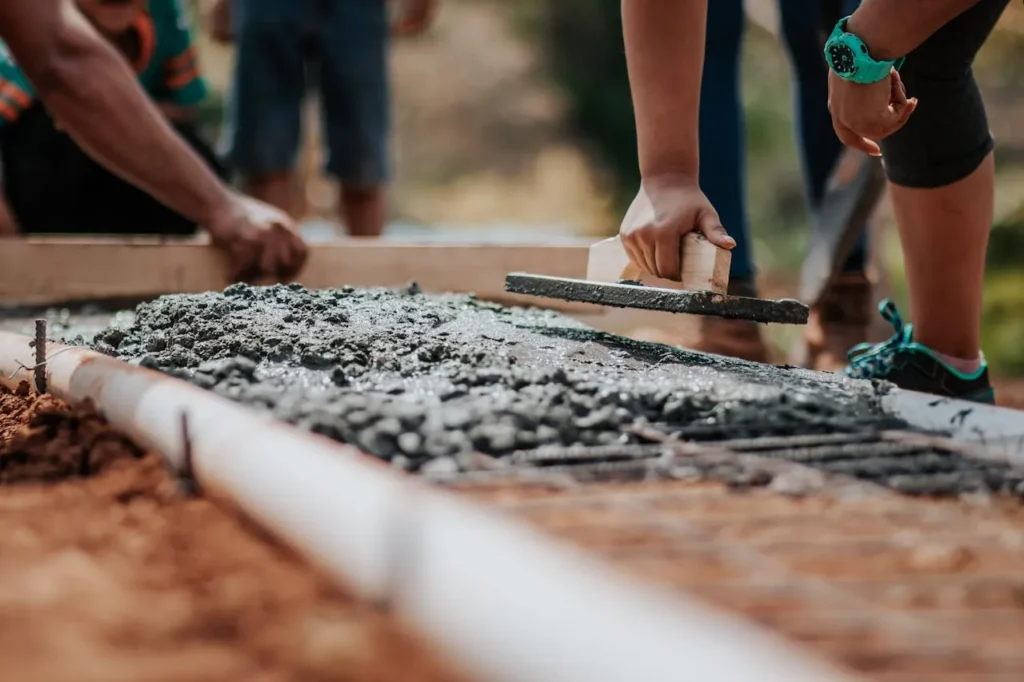
Should You Pour a Concrete Patio Yourself or Hire a Contractor?
Pouring a concrete slab is something handy homeowners can do themselves, and with the strong return a patio offers, it’s tempting to skip the labor costs and take on the project solo.
That said, a DIY patio rarely looks as clean or polished as one done by a professional. Some concrete patio finishes are also difficult to pull off without experience, which limits your options and your return. If you do the work yourself and get a solid result with a basic finish, expect an ROI of around 50%. That’s a decent return on your material costs alone, but it’s far below the 90% to 100% you could see by working with a landscape designer and a concrete contractor like Baird Construction to get the best possible outcome.
How to Figure Out What a Concrete Patio Will Add to Your Home’s Value
With potential returns ranging anywhere from 50% to over 90%, pinning down exactly what your concrete patio will be worth isn’t easy. If you’re thinking about selling your home soon, start by getting a patio installation quote from a local concrete contractor. Then, talk to a real estate agent in your area and ask what kind of return you can realistically expect. Their estimates may still differ from what you actually get back at closing, but combining a contractor’s pricing with an agent’s market knowledge is the most reliable way to gauge your patio’s ROI before you commit.
What Goes Into Installing a Concrete Patio?
The price of a concrete patio installation can vary quite a bit depending on several factors. The finish you choose has one of the biggest impacts , a simple broom-finished slab will cost significantly less than a multi-level patio with a stamped or stained surface. Patio size also plays a major role, since more square footage means more materials and labor hours.
Beyond finish and size, your location matters too. Labor rates differ from region to region, and soil conditions, grading, and drainage needs can all add to the scope of the project. If your yard requires significant prep work like removing an old surface, leveling uneven ground, or adding a gravel base that will factor into the overall price as well.
The best way to get an accurate number for your project is to request quotes from two or three concrete contractors in your area. Be sure to ask what’s included in each estimate, especially when it comes to site prep, finishing, and sealing, so you can compare them fairly and avoid surprises down the road.

Does a Concrete Patio Add Enough Value to Be Worth the Cost?
Adding a concrete patio will almost always improve your home’s curb appeal and make your outdoor space more functional. Whether you plan to stay in your home for years or sell soon, it’s usually a smart investment.
If you’re getting ready to sell, you can get the highest return up to 100% or more by hiring a landscape designer and a professional patio contractor to make the most of the project.
If you’re staying put, think about how often you’ll actually use the space for relaxing, grilling, or hosting guests, and keep your local climate in mind. If the project makes sense for your lifestyle, you’ll also benefit from the bump in property value over time. On top of that, concrete patio repair costs and ongoing upkeep are typically lower than what you’d spend maintaining a wood deck, making a concrete patio the better choice for long-term value when selling isn’t on your radar.
The Bottom Line on Concrete Patios and Home Value
A concrete patio is one of the most reliable outdoor upgrades you can make to boost your home’s resale value. With returns ranging from 50% to 100%, the key is making smart choices about your finish, size, and who handles the installation. Stamped or stained concrete with a professional design consistently delivers the highest returns, while warmer climates and right-sized patios push your ROI even further.
If you’re planning to sell, invest in a landscape designer and a skilled contractor to maximize your return. If you’re staying, you’ll enjoy a functional outdoor space that costs less to maintain than a wood deck and still adds value year after year.
Whatever your situation, start by getting a quote from a local concrete patio contractor and talking to a real estate agent so you know exactly what to expect before you break ground.
Frequently Asked Questions
How much value does a concrete patio add to a home?
A concrete patio typically adds between 50% and 100% of its installation cost to your home’s value. The average return sits around 70%, but higher-end finishes like stamped or stained concrete paired with professional installation can push that to 90% or above.
What is the best concrete finish for resale value?
Stamped and stained concrete finishes offer the highest ROI, typically returning 80% to 90% or more. Polished, broom-finished, and trowel-finished options fall in the mid-range at 60% to 80%, while stenciled, exposed aggregate, and painted finishes tend to return 50% to 60%.
Is it cheaper to pour a concrete patio yourself?
Yes, doing it yourself will save on labor costs, but it usually lowers your return on investment. A DIY concrete patio with a basic finish typically returns around 50%, compared to 90% to 100% when a professional handles the design and installation. The savings on labor often don’t make up for the gap in quality and ROI.
Does climate affect the value of a concrete patio?
It does. Homes in hot, sunny climates see the strongest returns often 80% to 90% or more because buyers can use the outdoor space nearly year-round. In moderate climates, expect around 70%. In areas with heavy rain or long winters, returns tend to drop to the 50% to 60% range.
How big should a concrete patio be to add the most value?
A patio between 200 and 400 square feet tends to offer the best balance of cost and return, with ROI ranging from 80% to 90% or higher. Patios under 100 square feet may only return around 50% to 70% because they limit how the space can be used. Going over 400 square feet can also reduce your return if the patio takes up too much of the yard.
Leave Your Comment