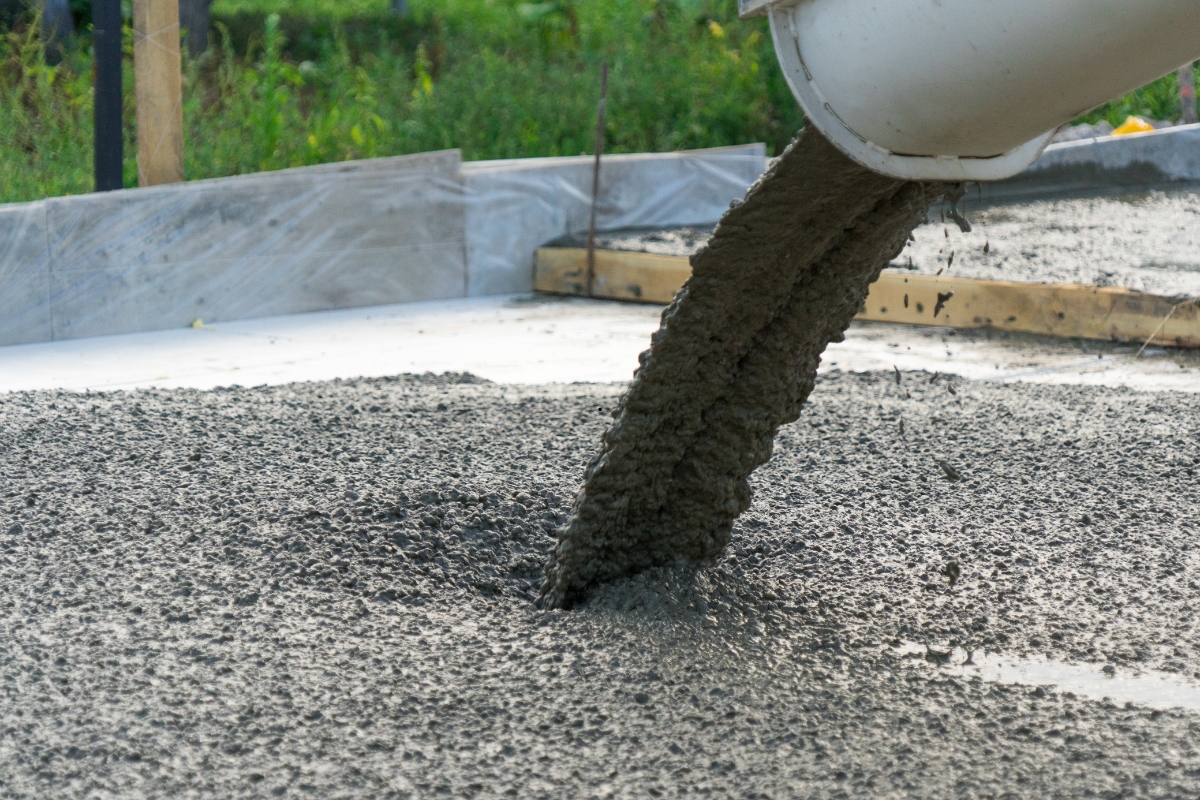
Concrete construction is a building method that uses a composite material made of cement, water, and aggregates (sand and gravel) to create durable structures and surfaces. The process involves mixing materials, placing them into formwork, curing to develop strength, and finishing for the desired appearance.
What concrete construction includes:
- Driveways, patios, and sidewalks – Durable outdoor surfaces for residential and commercial properties
- Foundations, garages, and basements – Structural concrete for load-bearing applications
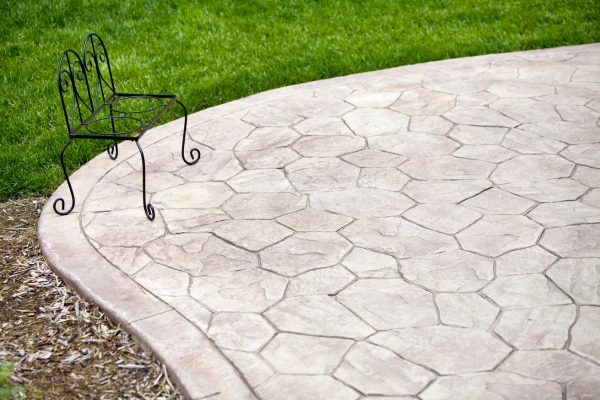
- Decorative finishes – Stamped, colored, exposed aggregate, broom, swirl, and smooth textures
- Retaining walls and drainage systems – Functional hardscaping for property grading and water management
- Pool decks and outdoor living spaces – Custom concrete for entertainment areas
Key benefits of concrete construction:
- Durability – Properly installed concrete lasts 50+ years with minimal maintenance
- Cost-effectiveness – Lower long-term expenses compared to alternative building materials
- Design flexibility – Molds into virtually any shape with multiple finish options available
- Energy efficiency – Thermal mass naturally helps regulate indoor temperatures
- Sustainability – Modern mixes incorporate recycled materials and low-carbon cement
Common types of concrete construction:
- Reinforced concrete – Steel bars added for bridges, tall buildings, and heavy-load structures
- Precast concrete – Factory-manufactured components for faster installation
- Cast-in-place concrete – Poured on-site for custom foundations and pavements
- Decorative concrete – Stamped, stained, or polished finishes for aesthetic appeal
- Shotcrete – Pneumatically applied for pools, tunnels, and curved structures
Professional concrete construction requires proper site preparation, accurate mixing ratios, careful placement, thorough finishing, and adequate curing time to achieve maximum strength and longevity.
What Concrete Construction Means
Concrete construction uses a composite material to build various structures and surfaces. This material combines cement, water, aggregates like sand and gravel, and special additives. According to the American Cement Association, the construction process follows several important steps to ensure quality and durability. First, mixing brings together cement, water, and aggregates to form a consistent blend. Next, placing involves pouring this mixture into formwork that shapes the final structure. Then, curing allows the material to harden and develop its full strength gradually. Finally, finishing smooths, textures, or treats the surface for appearance and performance needs.
Each step requires attention to detail for the best results. Professional concrete services appear in residential, commercial, and industrial projects across different industries. Its popularity stems from exceptional strength, cost-effectiveness, and long-term sustainability benefits. This construction method continues to be a preferred choice for countless building applications.
The Benefits of Concrete Construction
Concrete construction offers numerous advantages that make it the preferred choice for builders worldwide. Understanding these benefits helps property owners make informed decisions about their construction projects. From durability to design flexibility, this building method delivers value across multiple dimensions. The following sections explore the key advantages that set concrete construction apart from alternatives. Each benefit contributes to the overall success and longevity of your building investment.
Modern construction demands materials that perform reliably while meeting budget and sustainability requirements. Concrete construction rises to these challenges with proven solutions backed by decades of success. Whether you’re planning a residential driveway or a commercial foundation, these advantages apply universally. Smart builders recognize how these benefits translate into real-world value for their clients. Learning about each advantage empowers you to appreciate why concrete construction remains an industry standard. The combination of strength, affordability, and versatility creates unmatched value for construction projects today.
Strength and Long-Lasting Performance
Concrete construction delivers exceptional durability that stands up to demanding conditions year after year. This building method creates structures designed to serve communities for generations to come.
- Withstands harsh weather conditions, heavy loads, and constant use over extended periods
- Properly mixed and cured concrete endures for decades with minimal maintenance requirements
- Creates ideal solutions for structures requiring long-term reliability and structural integrity
- Reduces repair needs, saving both time and money throughout the building’s entire lifespan
- Provides consistent performance even in challenging environmental conditions and high-traffic areas
The lasting nature of this construction method makes it a smart investment. Property owners appreciate the minimal upkeep required over the years. The American Concrete Institute notes that this durability translates to lower costs and fewer headaches down the road.
Affordable Building Solution
Concrete construction stands out as a cost-effective choice for projects of all sizes. Smart builders recognize the financial advantages this method offers from start to finish.
- Delivers significant cost savings over time compared to other building materials available
- Combines exceptional strength with minimal maintenance needs to reduce long-term expenses
- Features wide availability and straightforward production processes for budget-friendly large-scale projects
- Extends affordability to both initial construction costs and ongoing care requirements
- Eliminates frequent replacement needs that drain budgets with other less durable materials
The economic benefits continue long after the initial construction phase ends. Lower maintenance costs add up to substantial savings over the years. Reviewing completed concrete projects demonstrates how this makes concrete construction an intelligent financial decision for any project.
Better Energy Performance
Concrete construction contributes to energy-efficient buildings that perform well in any climate. The American Institute of Architects recognizes this natural advantage that helps reduce utility costs while maintaining comfortable indoor environments.
- Offers superior thermal mass that effectively absorbs and stores heat energy
- Maintains stable indoor temperatures throughout changing seasons without excessive energy consumption
- Reduces reliance on heating and cooling systems, lowering overall energy usage
- Creates natural temperature regulation that decreases monthly utility costs significantly
- Provides passive climate control benefits that work continuously without mechanical assistance
Building owners enjoy comfortable spaces without excessive energy bills throughout the year. The thermal properties work naturally to stabilize interior temperatures effectively. This energy efficiency benefits both the environment and the bottom line.
Flexible Design Options
Concrete construction adapts seamlessly to diverse architectural visions and functional requirements. Designers appreciate the creative freedom this versatile material provides for projects.
- Molds into countless shapes, textures, and architectural styles with remarkable ease
- Serves decorative applications as effectively as heavy-duty structural requirements
- Ranges from simple functional surfaces to intricate artistic creations and custom designs
- Suits virtually any construction vision, whether modern, traditional, or contemporary in style
- Enables unique finishes and forms that other building materials cannot easily achieve
This adaptability makes concrete construction suitable for residential, commercial, and industrial applications. Creative possibilities remain virtually unlimited with proper planning and expertise. Options like omni stone paving show how the material responds well to both functional needs and aesthetic preferences.
Environmentally Responsible Choice
Sustainable concrete construction aligns with modern environmental priorities and green building standards. The National Ready Mixed Concrete Association promotes responsible practices that make this method increasingly eco-friendly for conscientious builders.
- Incorporates recycled materials and low-carbon cement in contemporary construction applications
- Minimizes environmental footprint through eco-friendly solutions and responsible material selection
- Reduces waste generation and promotes greener construction methods throughout the industry
- Supports long-term environmental protection goals while maintaining structural performance standards
- Enables builders to meet sustainability requirements without compromising quality or durability
Choosing environmentally conscious options demonstrates commitment to responsible building practices today. These sustainable approaches benefit current projects and future generations alike. Green concrete construction proves that strength and environmental responsibility can coexist.
Different Types of Concrete Construction
Concrete construction encompasses various methods, each designed to meet specific project requirements and conditions. Understanding these different types helps you select the most appropriate approach for your needs. Each method offers unique advantages in terms of strength, efficiency, and application possibilities. From reinforced structures to decorative finishes, the variety ensures solutions for virtually any project. Knowing which type suits your goals leads to better outcomes and successful construction results.
The construction industry has developed specialized techniques to maximize concrete’s versatility across different applications. Modern methods range from traditional on-site pouring to advanced factory-manufactured components and specialized applications. Each type serves distinct purposes in residential, commercial, and industrial settings effectively. Choosing the right concrete construction method impacts project timelines, costs, and long-term performance significantly. The following sections explain the most common types and their specific benefits clearly. This knowledge empowers you to make informed decisions about your concrete construction project needs.
Reinforced Concrete Construction
This construction method combines concrete with steel reinforcement for exceptional structural performance. The American Society of Civil Engineers confirms that the integration of these materials creates buildings that withstand tremendous forces and loads.
- Incorporates steel reinforcement bars to significantly boost overall strength and flexibility
- Works perfectly for bridges, tall buildings, and heavy industrial structures requiring durability
- Creates superior load-bearing capacity ideal for demanding applications and challenging conditions
- Handles both compression and tension forces effectively through material combination
- Provides enhanced structural integrity that exceeds what plain concrete can offer alone
The steel reinforcement prevents cracking and distributes stress throughout the structure evenly. This combination makes it possible to construct taller and more complex buildings safely. Engineers rely on this method when maximum strength is absolutely essential for success.
Precast Concrete Construction
Precast construction brings factory precision to building projects through controlled manufacturing processes. This approach delivers consistent quality that meets exact specifications every single time.
- Creates elements in controlled factory settings before transportation to job sites
- Ensures consistent quality and precise specifications for each individual component manufactured
- Speeds up overall project timelines considerably through quick transportation and assembly
- Eliminates many weather-related delays and quality issues through indoor production
- Reduces on-site labor requirements while maintaining high standards of construction quality
Factory conditions allow for better quality control than traditional on-site methods typically provide. ASTM International establishes testing standards that ensure weather cannot interrupt production schedules or compromise the curing process during manufacturing. This efficiency translates to faster project completion and reduced overall construction costs.
Cast-in-Place Concrete Construction
This traditional method remains popular for its flexibility and adaptability to unique projects. On-site pouring allows contractors to create custom solutions for specific construction needs.
- Pours and sets concrete directly on-site where it will remain permanently
- Commonly builds foundations, pavements, and major structural components for various projects
- Allows for custom shapes and sizes precisely tailored to specific design needs
- Provides flexibility valuable for unique or complex construction requirements and challenges
- Eliminates transportation limitations associated with precast elements and oversized components
Contractors appreciate the ability to adjust to site conditions and unexpected changes easily. This method works well when projects require unusual shapes or dimensions not easily precast. Features like concrete sitting walls demonstrate how on-site flexibility ensures perfect fit and proper integration with existing structures.
Decorative Concrete Construction
Decorative concrete construction transforms functional surfaces into beautiful architectural features with style. This specialized approach elevates ordinary concrete into visually striking design elements.
- Includes stamped, stained, or polished finishes that dramatically enhance visual appeal
- Transforms ordinary surfaces in homes, businesses, and public spaces into attractive features
- Offers extensive pattern and color options to create customized looks matching preferences
- Combines practical functionality with aesthetic value in one integrated construction solution
- Provides cost-effective alternative to expensive materials while achieving similar visual results
Property owners love the ability to achieve high-end looks without premium material costs. Decorative options mimic natural stone, brick, or tile at a fraction of the price. JLC Online frequently features how this versatility makes beautiful design accessible for projects with varying budget constraints.
Shotcrete Construction
Shotcrete construction uses specialized application techniques for superior bonding and structural integrity. This method excels in situations where traditional concrete pouring proves difficult or impossible.
- Applies concrete pneumatically at high velocity for superior adhesion and structural strength
- Excels in curved structures, tunnels, swimming pools, and retaining walls requiring precision
- Reaches difficult areas that traditional pouring methods cannot access easily or efficiently
- Provides exceptional durability and bonding properties ideal for specialized construction needs
- Reduces material waste through precise application directly onto prepared surfaces
The high-velocity application creates dense, strong concrete with minimal voids or weaknesses. This technique works exceptionally well for vertical or overhead applications requiring special methods. Contractors choose shotcrete when project conditions demand this specialized application approach.
How Concrete Construction Works
- Step 1: Preparing the Site Site preparation clears away debris and levels the ground before any pouring begins. Workers set up formwork that will shape the final structure according to plans. The International Code Council establishes building codes that ensure proper preparation creates a stable base for the concrete construction project. This foundation work determines the quality and longevity of the finished product.
- Step 2: Mixing the Material The concrete mix receives careful proportioning to meet specific strength and consistency standards. Mixing can occur on-site or arrive as ready-mix from specialized suppliers. Accurate ratios ensure the material performs as designed for each application. Quality mixing creates the foundation for successful concrete construction outcomes.
- Step 3: Pouring and Positioning Workers pour concrete into prepared formwork and spread it evenly across the area. Tools like shovels, rakes, and vibrators eliminate air pockets and ensure uniform distribution. Even placement prevents weak spots and structural problems in the finished work. This step requires skill and attention to achieve optimal results for features like concrete steps.
- Step 4: Finishing and Hardening Surface finishing uses trowels or stamps to create the desired texture and appearance. The American Concrete Pavement Association provides guidelines on curing that keeps the concrete moist at proper temperatures to develop maximum strength. This process typically takes several days to achieve full hardening and durability. Proper curing prevents cracking and ensures long-term structural integrity.
- Step 5: Checking and Verification Structural engineers and inspectors assess the concrete construction for quality and code compliance. They verify strength, durability, and proper execution according to established construction standards. Engineering News-Record reports on industry best practices that ensure thorough inspection catches potential issues before they become serious problems. This quality control protects safety and ensures reliable performance over time.
Conclusion
Concrete construction stands as a proven building method that delivers lasting value for projects of all types and sizes. From residential driveways to commercial foundations, this versatile approach meets diverse construction needs effectively. The benefits of durability, affordability, energy efficiency, and design flexibility make it an intelligent choice. Understanding the different types of concrete construction helps you select the best method for your specific project requirements. Each technique offers unique advantages that contribute to successful outcomes and long-term performance.
Professional concrete construction requires expertise, precision, and commitment to quality at every stage of the process. Proper site preparation, accurate mixing, careful placement, thorough finishing, and adequate curing all play critical roles. Quality workmanship ensures your concrete construction project meets structural standards and exceeds performance expectations. Whether you need reinforced structures, decorative surfaces, or specialized landscaping services, experienced contractors deliver results that last.
Our experienced team brings decades of expertise to every project. Don’t just take our word for it, read what our satisfied customers say about working with us. For more insights on concrete work, visit our blog or learn more about our company. Ready to start your project? Contact us today to discuss your concrete construction needs with Baird Concrete Construction.
FAQs
What makes concrete construction different from using other building materials?
Concrete construction combines exceptional strength with long-term durability that other materials cannot match easily. This method offers superior load-bearing capacity, weather resistance, and minimal maintenance requirements over decades of use.
How long does concrete construction typically last before needing major repairs?
Properly installed concrete construction can last 50 years or more with minimal maintenance needs. The actual lifespan depends on factors like climate, usage, installation quality, and regular care practices.
Can concrete construction work for both indoor and outdoor applications effectively?
Yes, concrete construction adapts perfectly to both indoor and outdoor environments across various applications. It performs well in homes, commercial buildings, driveways, patios, and industrial facilities with proper installation.
Is concrete construction an environmentally friendly option for modern building projects?
Modern concrete construction incorporates recycled materials and low-carbon cement to reduce environmental impact significantly. Sustainable practices and energy-efficient properties make it an increasingly eco-friendly choice for responsible builders.
What factors affect the overall cost of a concrete construction project?
Project size, design complexity, material quality, site conditions, and labor requirements all influence costs. Additional factors include finishing options, reinforcement needs, and local material availability in your area.
Leave Your Comment